If you want the look and warmth of a fire with none of the smoke or ash, switching to a natural gas insert or fireplace is a great choice But “going gas” can mean three very different things, and they are not interchangeable. The right choice depends on what is currently there, and what you want the center piece of your living room to feel like
The quick version
- Install Gas logs – To sit inside an existing fireplace. Mostly for looks. The lowest cost and the least heat.
- Install a Gas Insert – Goes into an existing fireplace opening and turns it into a sealed, efficient heater pulling air from the outside dispensing heat inside.
- Install a Gas Fireplace is a complete new unit built into a wall. It can go almost anywhere, but is the most involved project
Gas logs
A gas log set is a burner with ceramic logs that sits inside an existing fireplace. The fireplace itself stays the same, and the logs replace the need for anything else in the firebox.
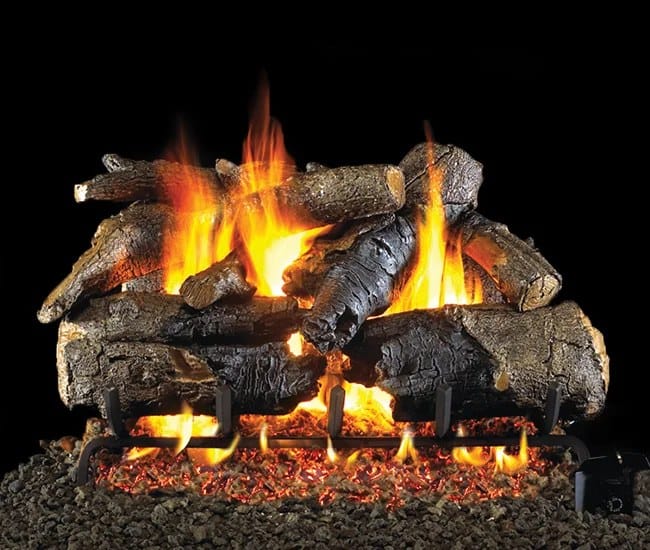
Vented and vent-free logs
Vented logs give the most realistic, tall yellow flames, but the chimney damper has to stay open whenever they are installed, so most of the heat goes up the chimney. Think of them as decorative.
Vent-free logs burn more cleanly and keep more heat in the room, but their combustion byproducts and moisture stay in the house too. They come with room size limits, and they are not allowed in some places or in some rooms, such as bedrooms. Ask your installer and your local building department whether they are allowed and appropriate for your home.
Best for
Homeowners who mainly want ambience, use the fireplace occasionally, and want the lowest upfront cost. Most similar to a traditional wood fireplace.
Gas inserts
An insert is a sealed firebox with a glass front that slides into your existing fireplace opening. It is direct vented through a new liner inside the chimney: outside air comes in for combustion and exhaust goes out the top. None of the warm air in your room gets pulled up the chimney.
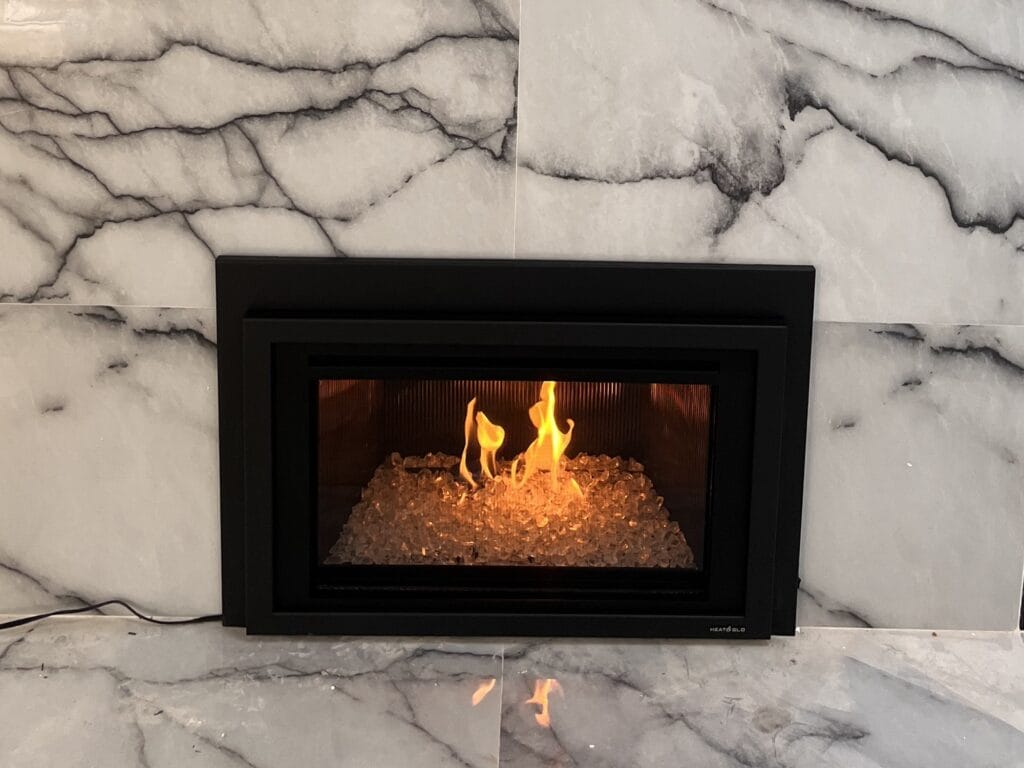
A good insert heats a room far better than gas logs, often enough to take real load off the furnace in the rooms around it. Most have blowers, thermostat remotes, and adjustable flame height.
Best for
Anyone with a masonry fireplace in a spot they like who wants real heat, a draft-free room, and lower operating costs than vented logs. It is a common upgrade in older homes.
Good to know
- The glass front means a more contained flame than open logs.
- It needs an electrical outlet for the blower and, on many units, for the ignition.
- A factory built metal fireplace can only take an insert that is approved for that use.
Gas fireplaces
A new gas fireplace is a complete engineered unit, with its own firebox, burner, venting, and controls, framed into a wall and finished with whatever surround you choose. Because direct vent units can vent straight out through an exterior wall, you do not need a chimney at all.
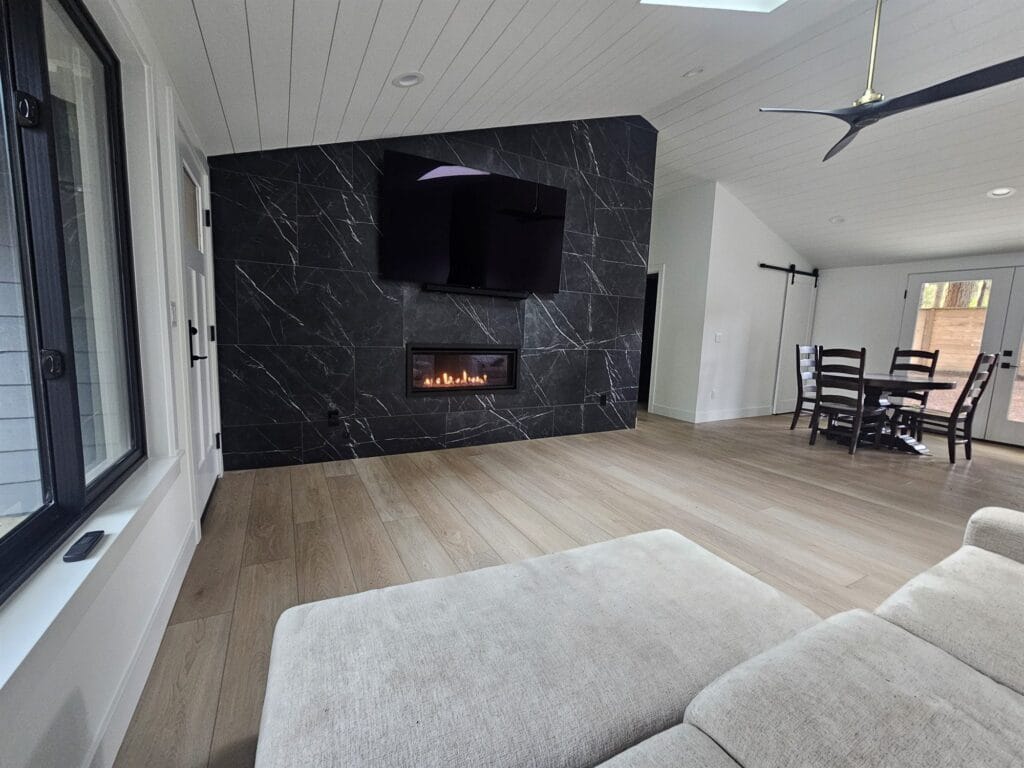
This is where the design options open up: long linear flames, see-through fireplaces between two rooms, corner units, fireplaces below a wall mounted TV, and outdoor fireplaces on covered patios.
Best for
Homes with no fireplace, a fireplace in the wrong spot, a remodel or addition, or anyone who wants a modern look an insert cannot give.
Side by side
- Upfront cost: gas logs lowest, inserts in the middle, new fireplaces highest
- Heat into the room: vented logs very little, inserts and fireplaces a lot
- Needs an existing fireplace: gas logs and inserts yes, new fireplaces no
- Sealed from room air: inserts and direct vent fireplaces yes, gas logs no
- Design flexibility: gas logs low, inserts moderate, new fireplaces high
What about the fireplace I already have?
If you have an old fireplace that mostly sits unused because it is drafty or a hassle, an insert is usually the best value. It keeps the location and hearth you already have, and turns a cold corner of the room into the warmest spot in it.
Our Fireplace Builder walks you through the indoor fireplaces, inserts, and outdoor units that suit your home. Not sure which direction is right? Ask us and we will look at what you have.