Flip a switch and the fire pit lights. No key to hunt for, no long lighter, no leaning over the burner. That convenience usually comes from a hot surface ignition system, one of the most common ways to light a built in gas fire pit electronically.
What is hot surface ignition?
Instead of a spark, a hot surface ignition system uses a small ceramic heating element, usually shaped like an M or a fork. When the system is switched on, electricity runs through the element and it heats up until it glows at 1,200°F or more. That is hot enough to light gas on contact (natural gas catches fire on its own at roughly 1,100°F to 1,200°F, and propane a bit lower), so the moment gas reaches the glowing element, it lights.
The igniter never lights the main burner directly. It lights a small pilot flame, and a sensor has to confirm that pilot is burning before the main burner gets any gas. That check is the heart of the system and the main reason these setups are considered so safe.
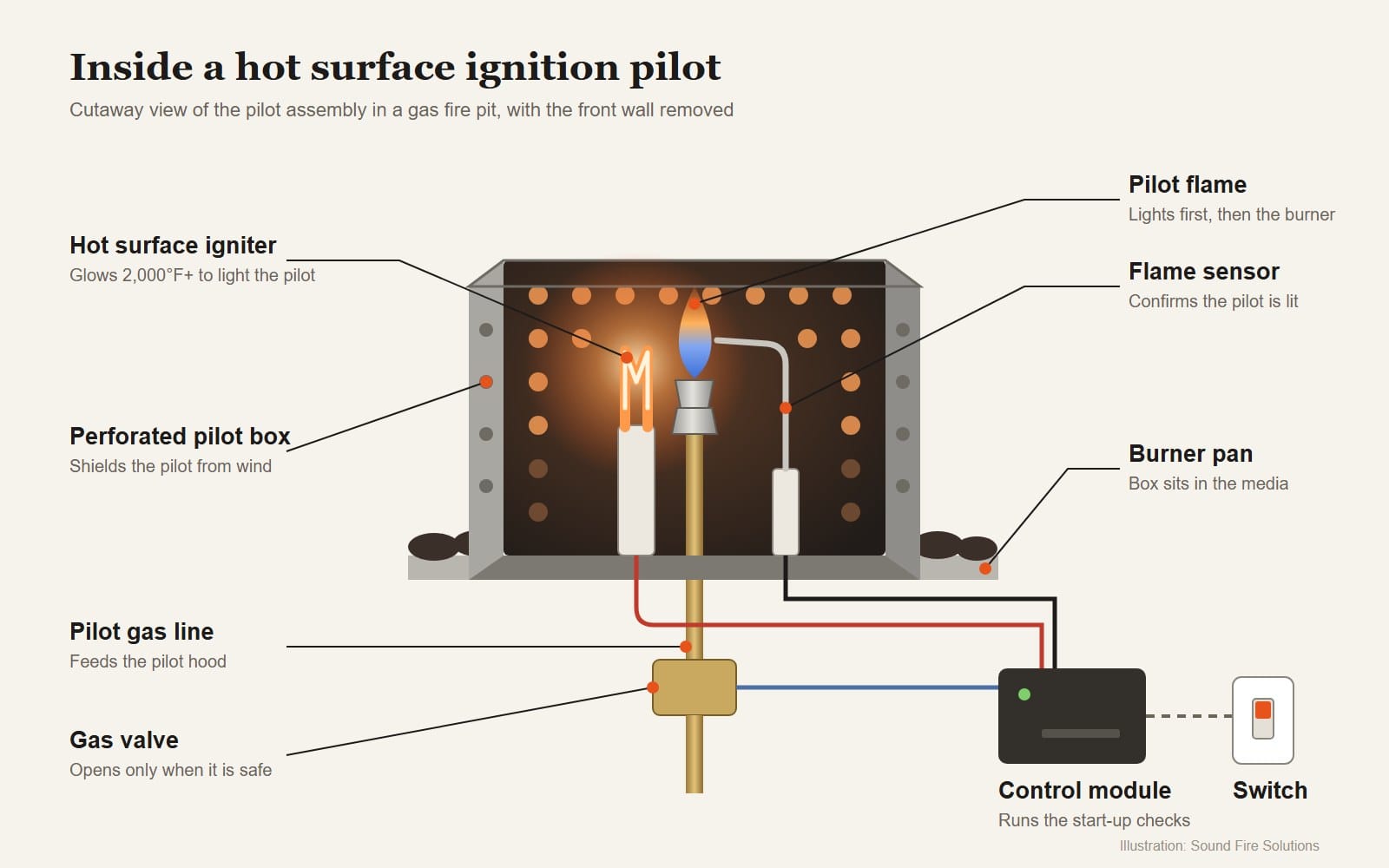
The parts, from the top down
- Hot surface igniter. The ceramic element that glows to light the pilot. It is a wear part and eventually needs replacing, like a light bulb.
- Pilot. A small burner fed by its own gas line. It lights first and then carries the flame to the main burner.
- Flame sensor. A thin rod that sits in the pilot flame. As long as it detects flame, the system keeps the gas on.
- Perforated pilot box. A small metal enclosure around the pilot that lets gas and air through while blocking gusts of wind. It sits down in the burner pan, surrounded by your lava rock or fire glass.
- Gas valve. An electrically controlled valve that stays shut unless the control module tells it to open.
- Control module. The small box that runs the whole sequence and does the safety checks.
- Switch. Usually a wall switch or a timer switch near the patio door.
What happens when you turn it on
- You flip the switch. The control module wakes up and runs a quick self check.
- The igniter heats up. Power goes to the igniter, and the module waits a few seconds for it to reach full temperature before any gas flows.
- The pilot lights. The valve opens gas to the pilot only. The gas meets the glowing igniter and lights.
- The sensor confirms the flame. The module checks the flame sensor. If there is no flame, the pilot gas shuts off right away.
- The main burner lights. Once the pilot is confirmed, the valve opens to the main burner and the pilot flame lights it. The whole process usually takes around ten seconds.
While the fire is burning
The module keeps watching the flame the entire time the fire pit is on. If a strong gust or a downpour puts the flame out, the sensor notices within seconds and the gas shuts off. Most systems will then try to relight on their own, typically a few attempts (often three). If none of them work, the system locks out and stays off until someone resets it. That way unburned gas never keeps flowing into your fire pit.
Turning it off
Flip the switch off and the module closes the gas valve. Both the pilot and the main burner go out, and nothing stays lit between uses.
Hot surface ignition vs. the other options
- Match lit with a key valve. You open the valve with a key and light the burner with a long lighter. It is the simplest and least expensive setup and needs no electricity, but there is no flame sensor watching the fire, so it relies on you to shut the gas off if the flame goes out.
- Spark ignition. A spark electrode lights the pilot instead of a hot element. These systems work well too, and you will hear a clicking while they light.
- Hot surface ignition. Quiet, reliable, and it starts from a switch or timer. It needs electrical power at the fire pit, which is worth planning for early, before the patio and the stonework go in.
Keeping it working
- Keep the pilot box clear. Do not pile lava rock or fire glass on top of the pilot box or pack media inside it. The pilot needs air.
- Do not touch the igniter. The element is brittle, and oils from your skin can shorten its life. If it needs cleaning or replacing, leave it to a technician.
- Cover the fire pit. A cover keeps rain, leaves and needles out of the pan and the pilot box. Standing water and debris are the most common reasons an electronic fire pit will not light.
- If it locks out, turn it off, wait a few minutes, and try again. If it keeps happening, the igniter or sensor may need replacing, which is a routine gas fire pit repair.
- If you ever smell gas, leave the fire pit off, move away from it, and call your gas utility from a safe distance.
Planning a fire pit with electronic ignition
If you like the idea of lighting your natural gas or propane fire pit from a switch, the time to decide is before construction, so the gas line, the power and the pilot assembly can all be planned together. In our Fire Pit Builder you can choose between a match lit key valve and an electronic wall switch system and see what the parts start at. Or tell us about your patio and we will help you pick the right setup.